HTC Sensation

Home Screen khas HTC Sense

HTC Sensation vs HTC Desire S

 Bagian Belakang yang Nampak Elegan

Aplikasi Cuara dgn animasi 3D 

Layar Lapang, mantap untuk main game datar seperti bilyard

Price : Rp. 6.500.000,- (Mei 2011)
Cukup lama menantikan HTC Sensation masuk ke Indonesia. Akhirnya sampai juga di tangan. Saya sangat penasaran dan ingin segera merasakan kerennya User Interface (UI) HTC Sense versi 3 yang baru ada di HTC Sensation ini. Harapan saya, dengan UI yang baru ini maka banyak perbaikan dan tambahan fitur yang lebih oke daripada versi sebelumnya, misalnya daya tahan batere yang lebih baik dan tambahan fungsi video call 3G menggunakan front kamera. Pertama kali menggenggam HTC Sensation saya langsung terkesan dengan bentuknya yang elegan dan cantik. juga bahannya yang menawan terasa mantap dalam genggaman. Saat dinyalakan, saya lebih terpukau lagi dengan tampilan UI-nya yang baru, full animasinya yang terlihat lebih ciamik dari versi sebelumnya. Yang pertamakali terasa beda yaitu ketika membuka lock screen, yang biasanya cukup digeser ke atas setengah layar namun kali ini bisa digeser ke sembarang arah dan bisa kita mainkan/putar terus menerus untuk mendapatkan efek animasi yang kita inginkan. Perbedaan yang kedua yaitu dalam mengakses home screen (7 halaman) biasanya kita harus menggeser ke kanan atau ke kiri, kemudian kalau sudah mentok di screen paling pinggir maka kita harus menggesernya berlawanan arah untuk menuju ke sreen sebelumnya. Namun kali ini, home screen pada HTC Sense versi 3 bisa kita akses dengan sistem rotasi, yaitu ketika kita telah berada pada home screen paling pinggir, kita tidak perlu lagi menggesewrnya berbalik arah, cukup kita lanjutkan menggeser layar dalam satu arah dan home screen akan terus berputar hingga kita menemukan halaman yang kita tuju,
HTC Sense 3 ini tetap bagus dalam mempertahankan kompatibilitas terhadap berbagai aplikasi android yang tersedia saat ini. Semua game/aplikasi yang pernah saya instal di HTC Sense versi sebelumnya, dapat berjalan dengan baik dan stabil pada HTC Sensation. 
Namun cukup disayangkan, disamping tampilan animasi yang semakin kaya dan beberapa fitur menarik yang ada, HTC Sensation ini masih jauh dari harapan saya. Baterenya yang boros, justru lebih boros daripada HTC Incredible S, juga tidak adanya fitur video call 3G (walaupun tersedia front kamera), membuat saya sedikit kecewa. Namun secara kinerja dan kecepatan memang tidak perlu diragukan lagi.
Spesifikasi:
- prosesor 1.2 GHz dual-core processor, Adreno 220 GPU, Qualcomm MSM 8260 Snapdragon
- layar Super LCD 540 x 960 pixels, 4.3 inches
- memory 1 GB ROM untuk aplikasi, dan 768 MB RAM untuk kinerja
- kamera 8 MP, 3264x2448 pixels, autofocus, dual-LED flash
- Android OS, v2.3 (Gingerbread) with HTC Sense 3
- batere Li-Ion 1520 mAh
Kelebihan :
- HTC Sense 3 kaya fitur dan full animasi 3D
- layar lapang 4,3 inc
- resolusi tinggi 540 x 960
- kamera 8 megapixel video HD 1080p@30fps
Kekurangan :
- batere sangat boros
- front camera belum bisa untuk video call 3G
READ MORE - HTC Sensation

HTC Desire S


Price : Rp. 4.700.000,- (Juni 2011)
Awalnya sih penasaran aja kok ada HTC dengan spec tinggi tapi harganya di bawah 5 jutaan mengingat semua ponsel smartphone HTC High End memiliki harga yang sangat mahal di atas 6 juta bahkan hingga 8 juta. Apalagi untuk keluaran terbaru seperti HTC Desire S ini. 
Inilah Spesifikasi dari HTC Desire S :
- CPU :  1 GHz Scorpion processor, Adreno 205 GPU, Qualcomm MSM8255 Snapdragon
- Memory : 1.1 GB ROM, 768 MB RAM
- Resolusi : 480 x 800 , 3,7' Super LCD
- Gorilla Glass (layar anti gores)
- Android 2.3 Gingerbread (namun belum HTC Sense 3)
- Kamera utama 5 megapixel with autofocus and single flash
- Front Camera (namun belum bisa untuk video call via 3G)
- Radio FM
- Kapasitas baterai cukup besar 1.450 mAh
- dll
Kelemahan :
- Hasil kamera masih kurang oke , mungkin karena masih menggunakan 5 megapixel dan 1 lampu flash
- sulit sekali untuk membuka panel belakang untuk mengganti SIM card atau microSD
- dan ini nih yang paling penting, koneksi jaringan data (baik 2G atau 3G) sering terputus sendiri, dan harus dipancing dengan mengaktifkan Plane Mode kemudian dikembalikan lagi ke Seluler Mode. cukup merepotkan apabila kita tidak menyadarinya, bisa-bisa kita ketinggalan email penting, atau kelewatan tweet penting atau notifikasi lainnya..


insert : 4 Smartphone Android dalam 1 test. minus HTC Sensation (baru kemaren sampai di tangan) tunggu ulasan tentang HTC Sensation di blog ini.
READ MORE - HTC Desire S

Motorola Milestone


Price : Rp. 5.500.000,- (Februari 2010)
Smartphone android ini cukup diperhitungkan keberadaannya pada saat peluncurannya satu tahun yang lalu. Namun pada saat itu saya lebih tertarik untuk memilih HTC Google Nexus One. Tapi karena rasa penasaran saya akhirnya kesampaian juga mencicipi HP dengan postur elegan ini. Ya.. awal mulanya sih saya kepincut dengan penampilannya yang stylish tanpa mempertimbangkan spec-nya yang minim. Tampilannya nampak keren saat sliding digeser terbuka, dan nampak gagah saat sliding ditutup. Namun hanya dalam waktu singkat saya sudah kecewa dengan kinerjanya yang lambat dan sering hang, ini dikarenakan memory yang minim, saat pertama kali dihidupkan saja memory yang tersisa sudah di bawah 100 MB, dan ketika saya jalankan beberapa aplikasi, eh... task manager menunjukkan sisa memory tinggal 15 MB. Sangat disayangkan ya.. kekurangan lainnya antara lain: hasil kamera kurang fokus dan warna cenderung kusam, baterai terbilang boros, touch screen kurang sensitif, dan kompatibilitas terhadap aplikasi yang kurang, banyak aplikasi atau game yang tidak berjalan dengan lancar pada ponsel ini, ditambah lagi Motoblur saya anggap kurang menarik karena saya sudah mencicipi HTC Sense yang lebih powerful. Sejak saat itu saya sudah kurang antusias mencoba smartphone keluaran Motorola, ada Motorola Droid 2, Milestone 2, Motorola Defi, tapi saya sudah tidak antusias lagi, saya justru lebih antuisas produk Motorola yang lain sepeti Bluetooth Headset dan multimedia, saya mengkoleksi beberapa produk unggulan lain dari Motorola dan saya ulas di blog saya yang lain, silahkan Anda kunjungi klik disini GADGET.
READ MORE - Motorola Milestone

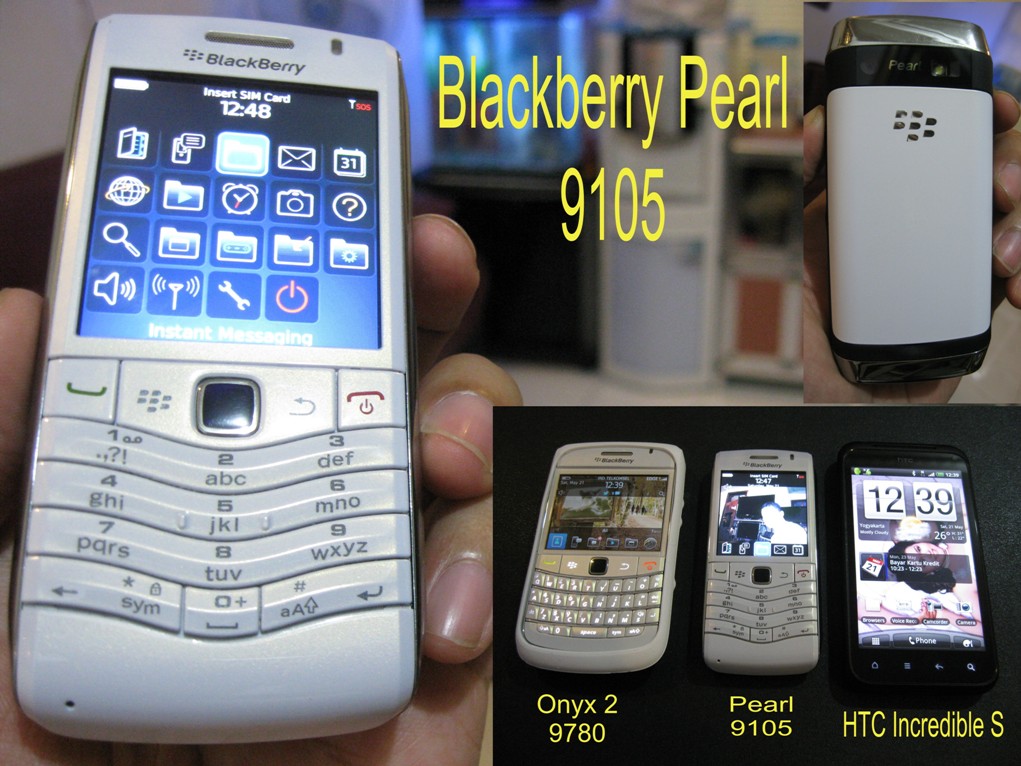
Blackberry Pearl 9105


Price : Rp. 2.500.000,- (April 2011)
Harganya terpaut sedikit dengan Gemini atau Javelin, namun spesifikasinya sangat unggul. Kamera 3 megapixel, jaringan 3G, RAM 256 MB, mendekati spesifikasi Onyx 9700, inilah yang perlu diperhitungkan dalam memilih Blackberry ini ketimbang Gemini, Javelin, atau Onyx. Namun ada satu hal lagi yang perlu dipertimbangkan, Blackberry Pearl ini tidak memiliki keyboard qwerty sehingga agak sulit dalam pengetikan, terutama bagi Anda yang hobby chatting dan messagging. Jadi... silahkan tentukan sendiri pilihan Anda...
READ MORE - Blackberry Pearl 9105

LG Optimus 2X


Price : Rp. 4.900.000,- (Mei 2011)

Inilah Gebrakan LG dalam persaingan ponsel android papan atas. Prosesor dual core 1,2 ghz menjadi andalannya, juga kekuatan Grafik dari Nvidia Tegra menjadi kelebihan tersendiri dari ponsel ini. Bentuknya dengan design yg elegan dan gagah terasa mantap dalam genggaman. Dual speaker stereo yg dimilikinya jarang ditemukan pada ponsel android lainnya, namun disayangkan kualitas suara yang dihasilkan masih kurang mantap. Ada juga port HDMI connect to HD TV menjadi daya tarik tersendiri, namun sayang tidak disertakan kabel HDMI to TV dalam paket penjualannya... Kelebihan lain dari ponsel ini yaitu dilengkapi dengan front camera yang bisa digunakan untuk video call via jaringan 3G, inilah yang bikin iri para HTC Mania.. ya.. kebanyakan ponsel android HTC yang sudah dilengkapi dengan front kamera namun semuanya tidak bisa dipakai untuk video call 3G, termasuk keluaran terbaru seperti HTC Sensation dan Desire S (nanti akan saya ulas juga dalam waktu dekat).

Kekurangan dari LG Optimus 2X :
- RAM masih 512 mb
- kinerja kurang stabil, bahkan sering restart bila terlalu diforsir
- layar kurang sensitif (dibanding HTC)
- user interfacenya kurang oke, kalah jauh dengan HTC Sense dan Moto Blur
- Storage internal sebesar 6 GB terbaca sebagai external SD card, kadang cukup membingungkan apalagi kalo masih kita tambah microSD jadi terbaca ada 2 external storage
- kompatibilitas aplikasi masih kurang baik, saya instal MotoSpeak untuk membacakan sms masuk namun tidak dpt bekerja dgn baik.
- dll
Bila ada yang mau didiskusikan lagi, silahkan melalui twitter saya  @benynem
READ MORE - LG Optimus 2X

War on Teachers?

Cross-posted from JDS Social Issues:

From my inbox almost two months ago:

So, where did this war on teachers, and other public employees come from? I certainly didn't see that coming.

A former colleague (a faculty member in a humanities department) was responding directly to word that Pennsylvania was cutting P-12 funding and slashing state support for public higher education. But her consciousness was framed by events in Wisconsin and elsewhere.

So I have been paying attention to the news in a new way. Is my colleague right? Is there a “war on teachers�?? I think she may right that there is a “war�? going on but I’m having a little more difficulty determining just what it is we are fighting about and fighting for. Are teachers the target? Or are teachers collateral damage in a larger struggle –because teachers (and their students) don’t fight back and because everybody feels entitled to an “expert�? opinion about educational matters generally?

I hope to think more about this over the summer and invite any readers to join in with news items, anecdotes and analyses that help us all figure out where we want to stand in what is clearly a struggle for the social, economic, political and educational terrain within our own communities and our nation.

Here are a couple for starters:

A� Randy Turner, commenting on the Huffington Post about new education legislation in Missouri, asks whether public school teachers are an “endangered species�?? His question is motivated by regulatory proposals that seem to suggest that all teachers are lazy perverts.

http://www.huffingtonpost.com/randy-turner/public-school-teachers-ar_b_861407.html

A� Paul Mucci, a fifth grade NBPTS certified teacher, asks

http://www.tcpalm.com/news/2011/may/16/paul-mucci-since-when-did-teachers-become-the/

“since when did teachers become the bad guys?�? Mucci is in Florida where education is rapidly being “reformed�? on the backs of teachers: “elimination of teacher tenure, teacher pay based on student performance, increasing teacher contributions to the Florida Retirement System, raising the retirement age/years of service, increasing student testing and reducing the number of "core" classes to name a few.�?

He conveys his demoralization clearly:

“More important, gone is the respect teachers once had. The steady erosion of respect is palpable in parent conferences, in line at the grocery store and in politicians' statements in the media.

As one legislator said to me, �?The public deserves accountability they deserve to know how their tax dollars are being spent.’ In one respect, he is right, but what good are numbers and test results if we lose our integrity, our compassion, our humanity along the way?�?

Mucci notes that it is ironic that the rhetoric is all about “good teachers�? but in the process they are destroying any chance of respect [for teachers].

A� Bill Haslam, Governor of my new home state of Tennessee apparently hasn’t met any Paul Mucci type teachers. Last week he rejected the Tennessee Education Association’s claim that “teacher morale is flagging,�? despite passing measures that limit collective bargaining and proposing others that would end any licensure for educational professionals. (More on events in Tennessee in the days to come.)

http://www.dnj.com/article/20110527/NEWS01/110526017/Haslam-rejects-claims-teacher-morale-flagging

As someone who spends a fair amount of time cultivating partnerships with public schools so that we can jointly (university/school) provide substantive and challenging but guided practical experience for teacher candidates, my sense is that teacher morale is fragile at best. Neither principals nor teachers – no matter how accomplished --generally feel free to take on novice teacher candidates. Even when they can identify the value of teaching collaboratively with a young person with energy and ideas, they are hesitant, even fearful, about jeopardizing their compensation and even their jobs (based largely on student test scores). Everybody is looking over both shoulders at once.

What do these snippets suggest?

Whether or not there is a war on teachers, teachers are feeling under siege. And the march of legislation that targets the teaching profession is undeniable. But the point of the legislation is harder to tease out. Limiting collective bargaining might be a cost-cutting measure. It might be an undercut-the-unions measure (my favorite theory with thanks to Jon Stewart and Rachel Maddow). The undercut-the-unions theory is supported by proposals in Tennessee to get rid of teacher licensure all together. Put this together with the appointment of a new Commissioner of Education with a Teach for America and charter school background and it does appear that the war is not on “teachers�? per se but on the public school “establishment�? (whatever that is).

The point then is an utterly free market for education? (Odd that we would seek a free market for the development of human capital when we have no such truly free market for any other commodity – oil subsidies, farm subsidies, interstate highway systems anyone?)

But this is a kaleidoscopic phenomenon, I think, and this particular ideological interpretation is just today’s turn of the barrel. What does it look like to you? What will it look like tomorrow?

READ MORE - War on Teachers?

Scholarship winners, life's winners

(cross posted from my dean's blog)

Forty-seven percent. Within that statistic is news both wonderful and sobering.

Nearly half of all of the graduate students who received College of Education scholarships for 2011-12 are the first in their families to go to college. That’s the wonderful part. Those future educators are realizing the American dream of self-improvement. But the number also speaks to the need for financial support, which is especially acute for first-generation students and their families.

This spring, faculty and staff volunteers reviewed the scholarship applications. They weighed the students’ accomplishments and goals and stretched the contributions of our generous donors to award 96 scholarships totaling $171,150. The average per student was $1,782.

Amy Cox of our development team, who coordinates the scholarship selection effort, provided those statistics. Others that might interest you:

In all, 98 graduate students and 453 undergraduates applied for scholarship assistance.
Scholarships were awarded to 24 juniors, 31 seniors, and 41 master’s and doctoral degree candidates.
Twenty-eight percent of the scholarship winners are minority students. The largest groups represented were Hispanic/Latin America (seven) and Asian Pacific American (five).
Seventy percent of scholarship winners are women.
Seventy-six are enrolled in Pullman, six in Vancouver, eight in Tri-Cities.

More compelling than the numbers, of course, are the people they represent. Here are two examples:

Israel Martinez of Walla Walla starts our Master in Teaching program this summer.A Israel, the first in his family to get a college degree, wrote in his application: “It has taken a lot of hard work and dedication, such as working two part-time jobs while being a full-time student, working overtime in the orchards during the summers to save enough money to stay in school.�?

Kelly Frio’s home town is Brush Prairie, Washington. That’s near Vancouver, where she is working on an undergraduate teaching degree. She has a perfect 4.0 grade point average. One of her goals, she wrote, is to instill an appreciation of the elderly in her own children and those she works with. “The wealth and skills and knowledge that our senior citizens possess is often not only unappreciated, but dismissed.�?

My congratulations to all of our scholarship winners and my thanks to those who support our scholarships. We only wish we could do more, for more. If you would like to help, look here for information.
READ MORE - Scholarship winners, life's winners

When Engagement is Not Enough

One of my goals as a dean of a school of education has been to expand the notion of what teacher preparation includes. To that end, I have been strongly pushing for the development of community engagement courses and academic programs in my own school and across the college. This is grounded in my ongoing academic research and in my belief that one cannot be a good teacher, administrator or staff in a PreK-12 school without realizing (on academic, experiential, and conceptual levels) that schools are deeply embedded within and an important part of their local communities. To that end, I have been working on series of pieces that expands on the notion of community engagement as much more than just service, service-learning, or experiential education. This is the first part of this series.
***
The community engagement movement – after a generation of activism and research and immense energy and effort – has reached an “engagement ceiling.�? It is now time to plot the second wave.

This movement – composed of a loosely inter-related set of programs, practices, and philosophies such as service-learning, civic and community engagement, public scholarship, and community-based research – has become an assumed and expected part of the higher education landscape. More than half of all faculty, according to UCLA’s ongoing American College Teacher surveys, believe that instilling a commitment to community service is a very important or essential aspect of undergraduate education; NSSE data suggest that service-learning is one of very few “high impact practices�? that deepen undergraduates’ learning; and the Carnegie Foundation recently released its third round of colleges and universities selected as worthy of the “community engagement�? classification, whose membership now numbers over three hundred such institutions.

Yet even as the public face of community engagement becomes ever more embraced, there are troubling signs of its internal malaise. Key groups and scholars have begun to openly talk of a movement that has “stalled.�? Strong research suggests that co-curricular engagement continues to be a more meaningful variable than singular curricular service-learning courses in fostering a range of key student outcomes. And the plethora of programs, centers, and practices that intermix community service, service-learning, and civic engagement contributes to frustratingly opaque notions of even basic definitions, categories, and hoped-for outcomes in the field.

The trouble is not that service-learning and its ilk have not been successful enough. The problem, I suggest, is that they have been too successful. Too successful, that is, at positioning themselves as a social movement for the transformation of higher education to reclaim and rediscover its civic purpose and meaningful engagement with, for, and in their local communities. But in so doing, in becoming a movement that attempted to reach everyone across the academy, the community engagement movement has become unmoored from some basic precepts. There is neither a core vision nor an overarching network able to guide or link the disparate centers, groups, scholarly communities, national organizations and activists all attempting to, ironically enough, foster an engaged campus and community. The gap between the rhetoric and reality of the “engaged campus�? is ever increasing.

The reasons for this are complex, intertwined, and not easily changeable given the long-term economic retrenchment sweeping across the academy: the expanding demographics of “non-traditional�? part-time commuting students; the outsourcing of labor to contingent and adjunct faculty; and the “wickedly�? complex and contested problem of engaging with (much less solving) community issues enmeshed within multiple racial, political, economic, social, and historical realities. If the goal of the first generation of scholars and activists was to transform higher education, the real issue is who is transforming whom.

I am not suggesting that we wipe our hands, shut the classroom door, and walk away from the pressing societal problems that colleges and universities must indeed be a part of solving. Rather, we must reframe how we think about the engaged campus: namely, community engagement must become an intellectual movement. If the next generation of scholars, students, and community members are to have a chance in fostering a deep, sustained, and ultimately powerful campus and community collaborations, then we must embrace a second wave of criticality towards civic and community engagement in the academy.

By this I mean what other movements, such as Women’s Studies and Black Studies, have accomplished in the last thirty years. They have created, through majors and minors and interdisciplinary concentrations and research centers, a means to influence and impact the knowledge production and dissemination of their respective areas of study. They have succeeded in the impressive accomplishment that it is no longer possible to speak simply or “obviously�? about what feminism or blackness “is,�? either within their respective fields, across the academy, or, for that matter, in the larger world.

Interestingly enough, academic programs (such as majors and minors) focused on community engagement have indeed begun to spring up helter skelter across the academy. I helped organize a research institute this past summer for academics interested in developing or expanding such academic programs. We expected twenty or thirty people to show up. Instead, we had to stop registration at ninety, as scholars, administrators, and doctoral students poured in from across the country, as well as a few from Canada, Mexico, and even Ireland. We have now documented over sixty academic programs at varying stages of development across the United States and will be hosting another institute this summer to continue to deepen this dialogue and support such program development.

There are longstanding and deeply impressive programs, such as Providence College’s major in Public and Community Service Studies and UC-Santa Cruz’s department of Community Studies. There is the newly developed Civic Engagement minor at Mary Baldwin College, and the Department of Justice and Policy Studies at Guilford College. In each case, there are dedicated faculty members attached to each program, doing the deliberate, careful, and critical work that is necessary for any successful academic program: advising students, creating introductory courses, questioning the quality of the capstone experience, reaching out to colleagues across the institution and community members outside of it for perspective and feedback and collaboration, advocating for additional tenure-track lines, and questioning whether what they do is ultimately of value and relevance to its critical stakeholders.

This, then, is the face of the next generation of the scholarship of engagement. It is the critical work that cannot take for granted the practice and philosophy of community engagement. For community engagement is a complex and contested practice that claims to engage in “border crossing�? and as such engages issues of power, race, and class. It is a practice that has real-world ethical, legal, and political implications as to what our undergraduates actually do out in the world. And it is a philosophy of practice that is seemingly at the heart of a liberal arts education. As such, what we do with, for, and in the community must be open to the same type of scrutiny as any other legitimate academic practice. It needs to be done in academic spaces that foster and strengthen the very qualities we are looking for in the community partnerships we espouse: deep, sustained, and impactful reflection, engagement, and action. That is an intellectual movement.

In the end, of course, this is not an either/or proposition. The academy must embrace both the community engagement and the critical academic spaces. To have engagement without the criticality is to succumb ultimately to a cheerleading mentality of a social movement with thin skin unable to withstand the critique of the academy. To have disciplined academic inquiry without a deep and sustained experiential community-based component is to succumb to an ineffectual model of “hallway activists�? where theory and practice are disjoined and disjointed and where the thick skin of academic debate cannot feel or see the needs of the community all around it. But without the next stage, without the second wave of critique within academic spaces, the next generation of the engaged campus will be ever more imperiled.
READ MORE - When Engagement is Not Enough

"Quite a Lot, Really . . ."

Been meaning to write something substantive, but then I found this as part of a review of a book on Wittgenstein and couldn't resist:
Then there is the question of the role of the endnotes in Klagge's study: some are simply references, some elucidations, and yet others mini-essays almost. They constitute some two-fifths of the book, which seems quite a lot really, as Monty Python put it with respect to the amount of rat in the tart.

Now that's what academic writing should aspire to. :)

From H-Net.
READ MORE - "Quite a Lot, Really . . ."

HTC Incredible S


Price : Rp. 6.500.000,-  (Maret 2011)

   Anda sudah bosan ya, setiap kali googling nyari info tentang gadget, eh.... hampir semua halaman yang Anda buka isinya kebanyakan sama persis alias copas alias copy paste. Nah, kini saatnya Anda follow blog saya, karena yang saya tulis disini berdasarkan pengalaman saya selama memakai produk tersebut.
   Kali ini saya akan membahas sedikit tentang HTC incredible S, yang merupakan keluaran terbaru dari HTC (sebelum nanti ada HTC Sensation dan HTC 3D Evo) dan sudah menggunakan Android Froyo pada OS-nya.
   Alasan pertama saya ingin mencicipi smartphone ini adalah pertamakalinya saya melihat HTC Android memiliki sebuah front camera. Dalam bayangan saya, produk ini bisa saya gunakan untuk video chat atau pun video call. Namun ternyata hanya fitur video chat saja yang bisa saya nikmati (video call kemungkinan bisa dinikmati setelah upgrade OS ke 2.3/Gingerbread).
   Alasan kedua adalah karena kapasitas baterenya sudah 1.450 mAh, saya berharap smartphone ini bisa bertahan jauh lebih lama dari HTC yang saya pakai sebelumnya yaitu HTC HD2 dan HTC Desire HD. Namun pada kenyataannya ternyata tidaklah berbeda cukup jauh, walaupun saya merasa agak sedikit hemat batere, namun masih lebih hemat ketika saya memakai Dell Streak.
   Alasan ketiga dan seterusnya adalah karena HTC Incredible S ini merupakan keluaran yang terbaru maka tentunya akan ada berbagai fitur baru dan kelebihan yang ditawarkan dalam produk ini..
Fitur Unggulan :
- Prosesor  : 1 GHz Scorpion processor, Adreno 205 GPU, Qualcomm MSM8255 Snapdragon
- UI HTC Sense versi 2, kaya akan widget dan sinkronisasi, memudahkan saat navigasi
- RAM : 768 MB
- ROM : 1,1 GB
- Batere : 1.450 mAh
- Ada tombol arrow pada virtual keyboardnya, memudahkan kita memindahkan cursor pada area yang tepat
- Kamera 8 megapixel autofocus, support macro untuk memfoto dokumen
- merekam video dengan kualitas HD
- Layar : Super LCD resolusi 480x800
- fitur SRS Enhanchmen pada Music Player
- Ada radio FM
- Support Flash Player
- dll
Kekurangan :
- Kapasitas batere masih tertinggal oleh smartphone lain yg sudah 1.900 mAh hingga 2.000 mAh di kelas 4 inch
- belum support video call
- belum support Surround HD Audio seperti pada HTC Desire HD
- belum stereo speaker seperti pada seri Android LG
   Sejauh saya memakai smartphone ini, sangat memuaskan, tidak pernah sekalipun terjadi error, hang, force close (seperti pada Dell Streak). Juga tidak pernah lemot walaupun saya tidak menginstal aplikasi Task Manager.
Tidak ada alasan obyektif untuk menggantikan Smartphone ini dengan Smartphone lainnya karena kinerjanya yang stabil dan memuaskan. Mungkin satu-satunya alasan saya untuk menggantikannya dengan Xperia Pro (alasan subyektif) adalah karena saya lebih suka keyboard qwerty daripada touchscreen, karena sesuai dengan kebutuhan saya dalam menulis blog, menggunakan keyboard qwerty tentunya jauh lebih nyaman ketimbang touchscreen. Namun hingga saat ini sayangnya Xperia Pro belum dipasarkan. Tunggu update saya yang terbaru, ketika Xperia Pro sudah di tangan saya, pasti akan saya ulas. Silahkan Anda follow agar tidak ketinggalan update terbaru . . .
terima kasih...
READ MORE - HTC Incredible S
Copyright © Hathir Blog